Selling on Amazon gives you a big chance to grow your business. Many sellers reach millions of buyers each day. However, this big opportunity also brings risk. One major risk is intellectual property infringement.
I have helped sellers work through IP complaints on both sides of the problem, ones who genuinely made an honest mistake and ones who got caught by a supplier cutting corners they never knew about. Amazon takes intellectual property infringement and intellectual property violations very seriously. If you break the rules, Amazon can suspend your account. It can also remove your listings. You may also face legal trouble. So you must understand what these rules mean before you list your first product, not after you get your first complaint.
Many new sellers do not fully understand intellectual property infringement. Some fall into common traps. This blog will guide you through these traps based on what I have actually seen go wrong across real seller accounts. You will learn how to stay safe and sell with confidence.
What Is Intellectual Property?
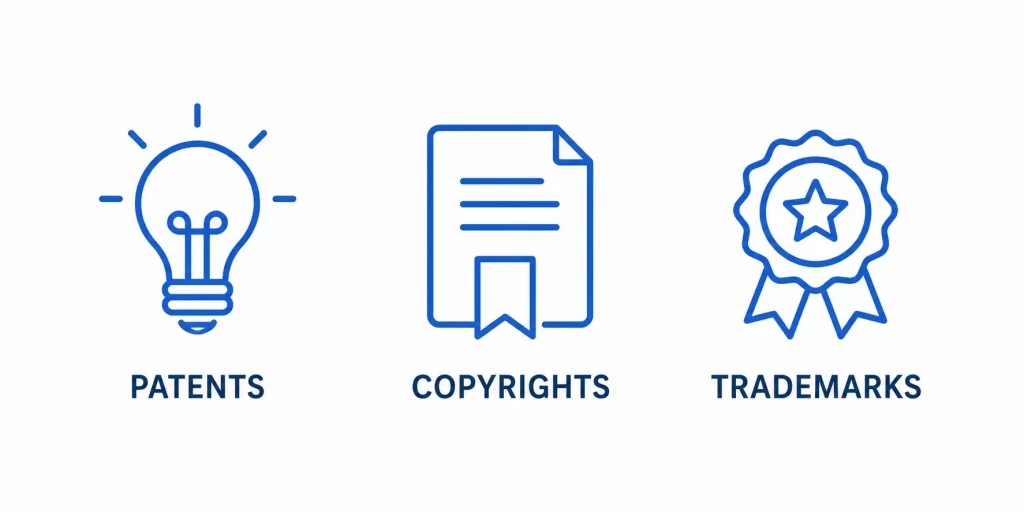
Intellectual property means your ideas, inventions, and designs. People use laws to protect these ideas. These laws stop others from stealing or copying them. You must follow these rules when selling on Amazon. There are different types of intellectual property. These include copyrights, trademarks, and patents. Each one protects a different part of a product or brand. You must learn how each one works.
If you use someone else’s work without permission, you can face an intellectual property infringement, sometimes referred to by Amazon and rights holders as an intellectual property violation. The terms are used interchangeably in most complaints and search results, so do not assume one sounds more serious than the other. Amazon will act quickly either way. They may take down your listing or ban your account. So always check before using anything you did not create.
Types of Intellectual Property Infringements on Amazon
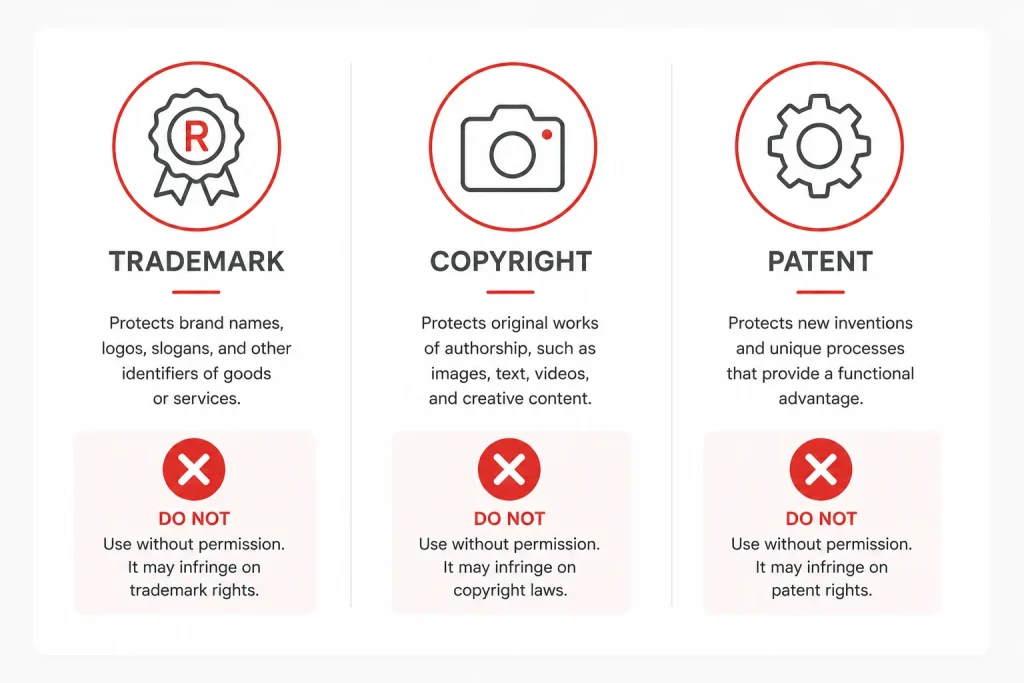
There are three main types of intellectual property infringement on Amazon. Each type has its own risks. Sellers must stay aware and act carefully. Trademark infringement happens when a seller uses another brand’s name or logo. This can be on the product or in the listing. Buyers may think the item is from the real brand. This confuses them and breaks Amazon’s rules.
Copyright infringement means copying someone’s pictures, text, or designs. For example, using a brand’s photo or product description without permission breaks copyright law. Amazon may remove your listing fast. Patent infringement happens when you sell a product that copies a protected design or invention. Even if you change the shape or colour slightly, it may still count as a copy. That is still an infringement.
Always make sure your product is original. Check your content carefully. If you follow the rules, you can avoid these traps. In my experience, sellers who treat these three categories as one single rule tend to miss something, since the checks that keep you safe from a trademark claim are not the same checks that protect you from a patent claim.
How Trademark Infringements Happen on Amazon
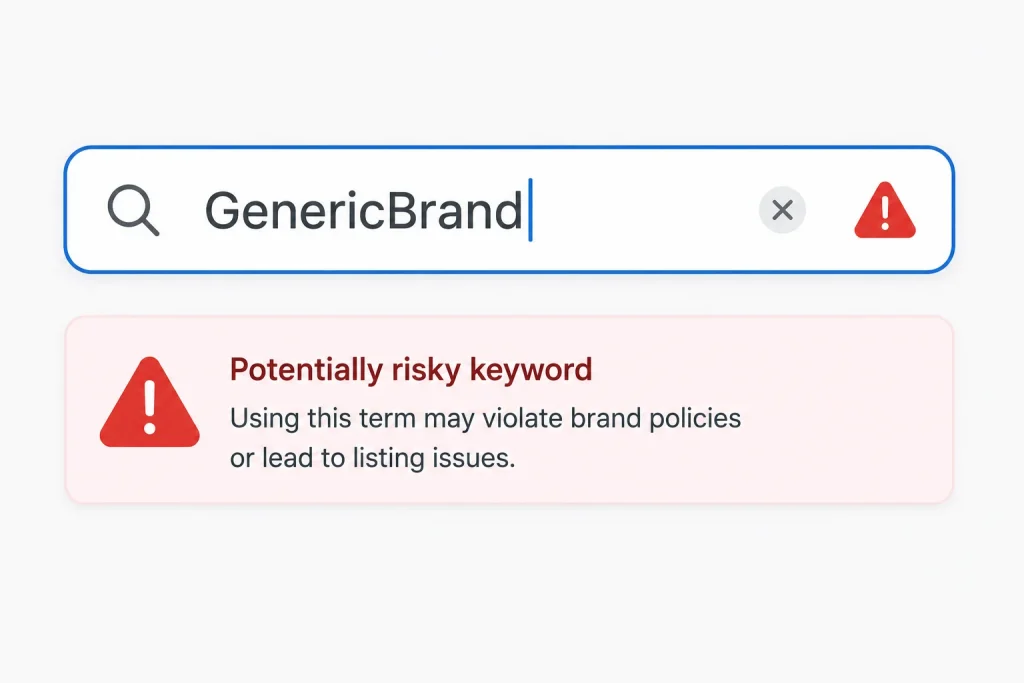
Trademarks protect a brand’s identity. This includes names, logos, slogans, and sometimes product designs. On Amazon, using a trademark without permission is a big mistake. Some sellers list products with brand names they do not own. Even if the product is real, using the name in the listing may lead to a violation. For example, writing “Compatible with Apple” without approval can trigger a trademark claim.
Another trap involves logos. Using a brand’s logo on your product images or packaging can also result in a trademark infringement. Amazon watches for this closely. Sellers who break this rule often face fast suspensions. I have reviewed listings where a seller added a competitor’s brand name purely as a keyword to catch search traffic, genuinely believing that mentioning a name was different from claiming to sell that brand. Amazon does not draw that distinction, and neither do most rights holders filing complaints.
How Copyright Infringements Happen on Amazon
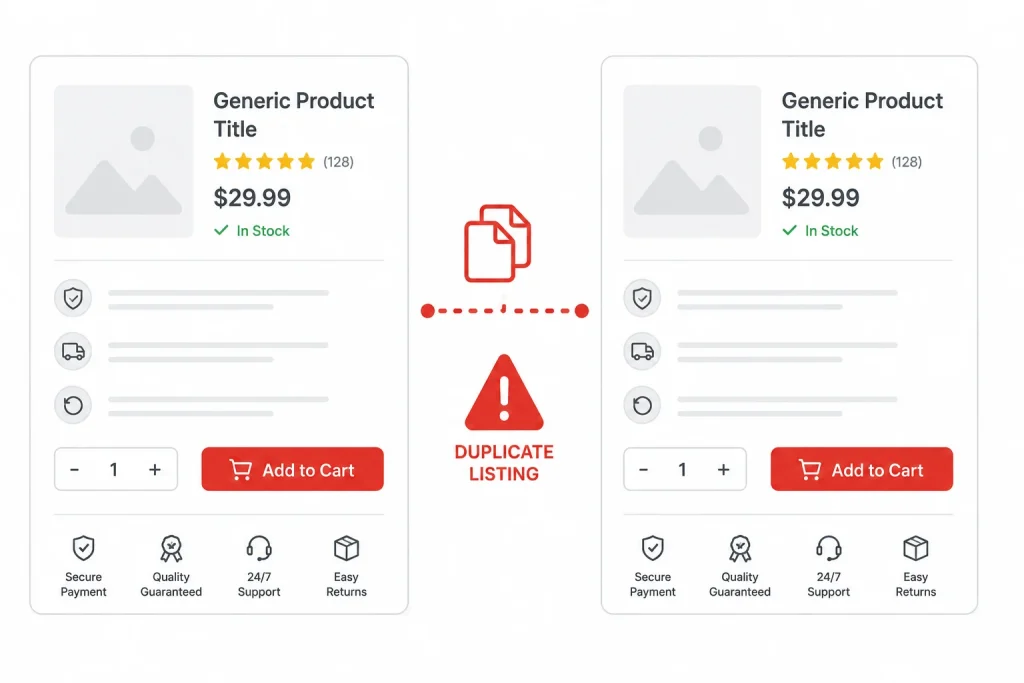
Copyrights protect creative work. These include product images, written descriptions, logos, and designs. On Amazon, many sellers make the mistake of copying this content. Some sellers copy photos from brand websites. Others copy full product descriptions. These actions are clear intellectual property infringements. Even small changes may still be considered violations.
Many sellers also reuse A+ content from brand listings. They believe it is okay since the products are similar. However, this is a major trap. Amazon checks listings closely. Sellers must create their own content to stay safe. I have seen this specific mistake trigger a complaint faster than almost anything else on this list, because A+ Content is easy to screenshot and easy for a brand’s team to spot showing up on someone else’s listing.
How Patent Infringements Happen on Amazon
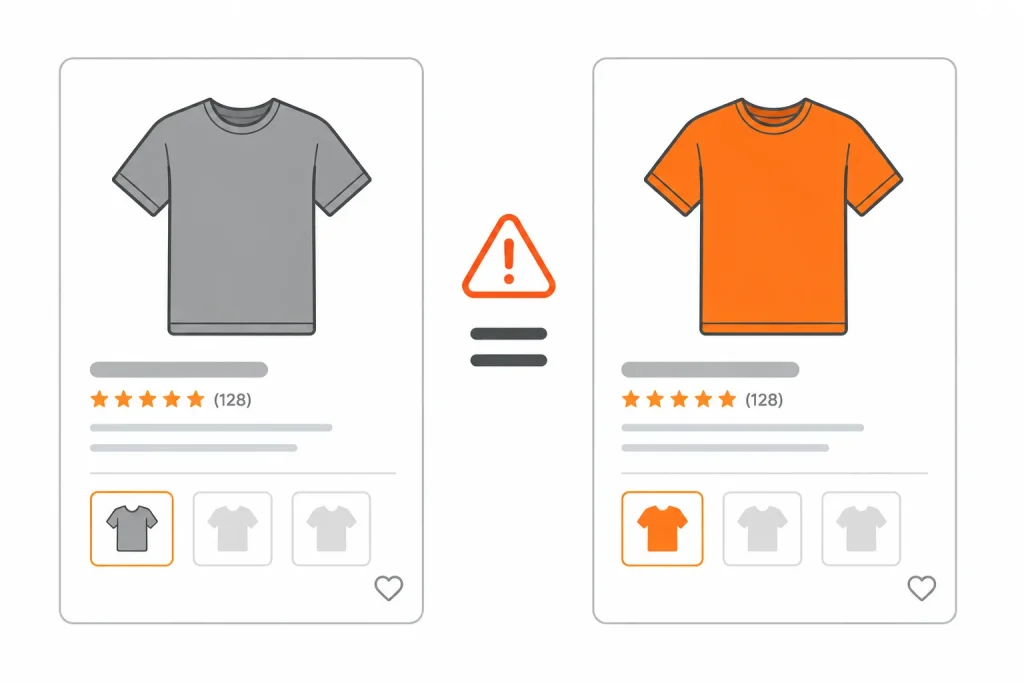
Patents protect new inventions or product designs. These can include simple tools, kitchen items, or electronic parts. On Amazon, selling a product that copies a patented design can get you into serious trouble. Some sellers source products from suppliers who do not understand patent rules. The product may look new, but it could still break a patent. If the patent owner complains, Amazon will remove your listing quickly.
Other sellers try to copy a trending item. They change the colour or the material slightly. This is not enough. If the original product has a patent, any copy can still be an intellectual property infringement. Patent complaints tend to be the messiest of the three to resolve, in my experience, because, unlike a copied photo or a misused brand name, proving whether a design actually infringes a patent usually requires more than a quick side-by-side comparison. That is exactly why sourcing due diligence matters so much before you ever list the product.
How Amazon Enforces Intellectual Property Rights
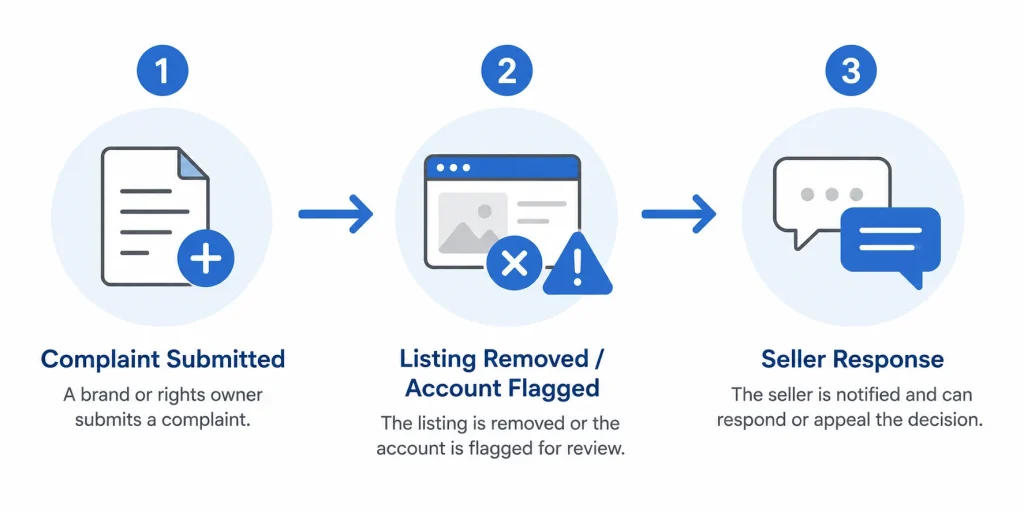
Sellers often ask me how Amazon actually enforces intellectual property rights once a complaint comes in, so it is worth walking through the process directly. Rights holders, meaning the actual brand, designer, or patent owner, submit a complaint through Amazon’s Report Infringement form or through Brand Registry if they are enrolled. Amazon does not typically investigate the underlying legal merits of a patent or trademark claim itself. Instead, Amazon generally acts on the complaint as submitted, removing the listing or suspending the account first, then giving the seller a chance to respond afterward.
This is the part that surprises new sellers the most. Amazon’s default posture leans toward protecting rights holders quickly rather than fully verifying every claim before acting, since delaying action on a genuine infringement creates more legal exposure for Amazon than a wrongly removed listing does. That is exactly why prevention matters so much more than a strong appeal after the fact. I have helped clients win back suspended listings, but it consistently takes longer and costs more in lost sales than avoiding the complaint in the first place would have.
For patent disputes specifically, Amazon also offers a Neutral Patent Evaluation process, where both sides can pay for an independent patent attorney to review the claim. It is not free, and it is not fast, but I have seen it work well for sellers who are confident their product genuinely does not infringe and want a faster resolution than a full legal dispute would take.
Common Mistakes Sellers Make That Lead to IP Infringements
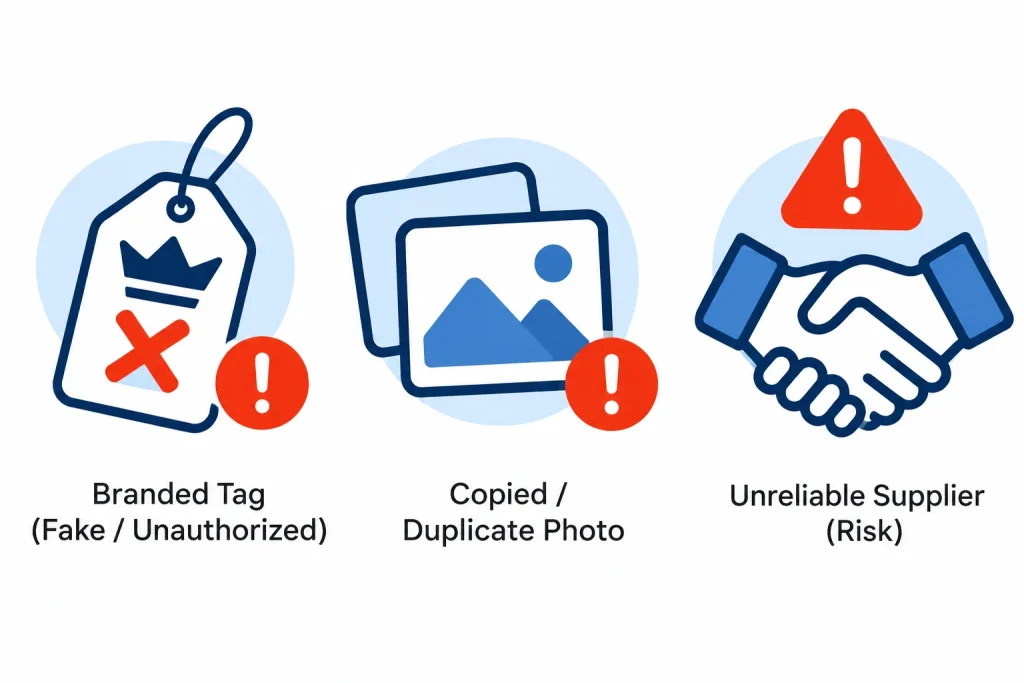
Many sellers fall into common traps. These mistakes can cause intellectual property infringements. You must avoid them to protect your account.
- Using branded terms in product titles without permission.
- Copying product images from supplier or brand websites.
- Reusing bullet points and product descriptions from other listings.
- Selling items with similar logos or packaging as major brands.
- Trusting suppliers without checking for patent issues.
These mistakes may seem small. However, Amazon checks all listings. One mistake can cost your account. So always double-check your content and your products.
Tips to Avoid Intellectual Property Infringements on Amazon
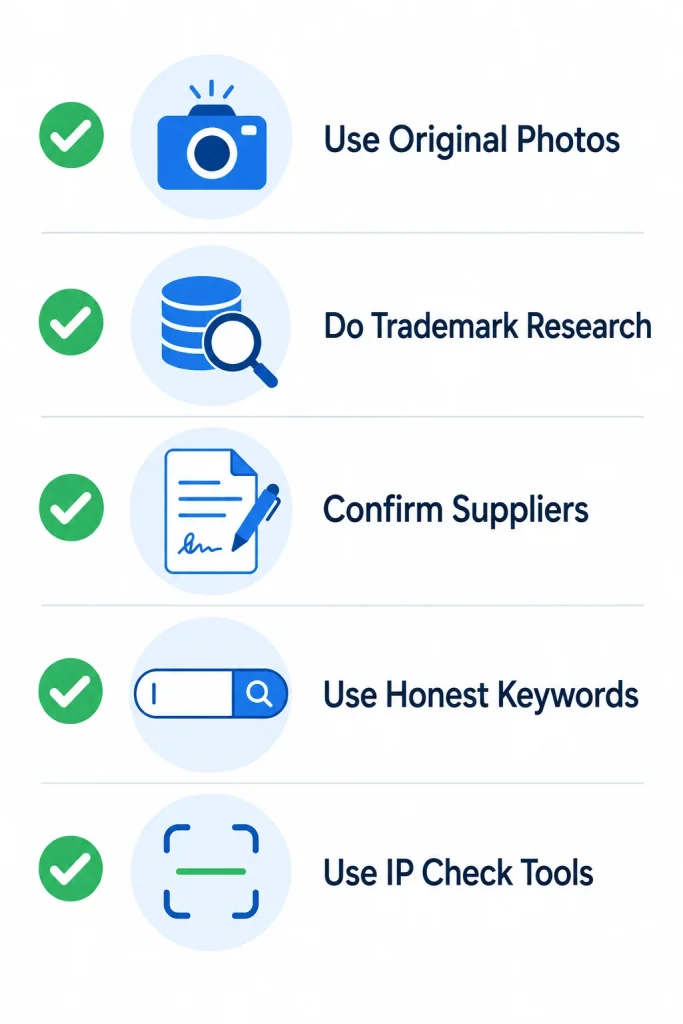
Avoiding intellectual property infringements is possible. You must stay alert and follow some smart steps. These tips can help:
- Create original content. Take your own pictures and write unique descriptions. Do not reuse brand material.
- Research trademarks. Check databases before using names, logos, or slogans. Do not assume it is safe.
- Ask your supplier. Always ask if the product design or function is patented. Get clear answers in writing.
- Avoid branded keywords. Do not use other brand names to attract clicks. Use honest and clear keywords.
- Use IP check tools. Amazon and other tools can scan your listings. Use them to spot risks before listing.
These tips help protect your seller account. They also build trust with Amazon and your buyers. The supplier’s step is the one I push hardest on with clients, since a written confirmation from a supplier costs you nothing to ask for and can genuinely help your case if a patent dispute comes up later.
What to Do If You Receive an IP Complaint

If Amazon sends you a warning or removes a listing, do not panic. You still have a chance to fix it. Act fast and stay calm. First, read the complaint carefully. Understand what type of intellectual property infringement it is. Check if it is a trademark, copyright, or patent claim. Then gather proof to support your case.
Contact the rights owner if possible. Ask for more details. If you are not at fault, explain your side clearly. Some rights owners will withdraw the complaint if you prove you did not copy their work. Finally, send a clear and professional response to Amazon. Write a plan of action. Explain how you fixed the issue. Promise not to repeat it. This can help you get your account back. I always tell clients to keep the plan of action specific and factual rather than emotional. Amazon’s review team reads a lot of these, and a vague apology tends to get far less traction than a clear breakdown of exactly what changed.
Case Studies: Intellectual Property Infringements in Practice
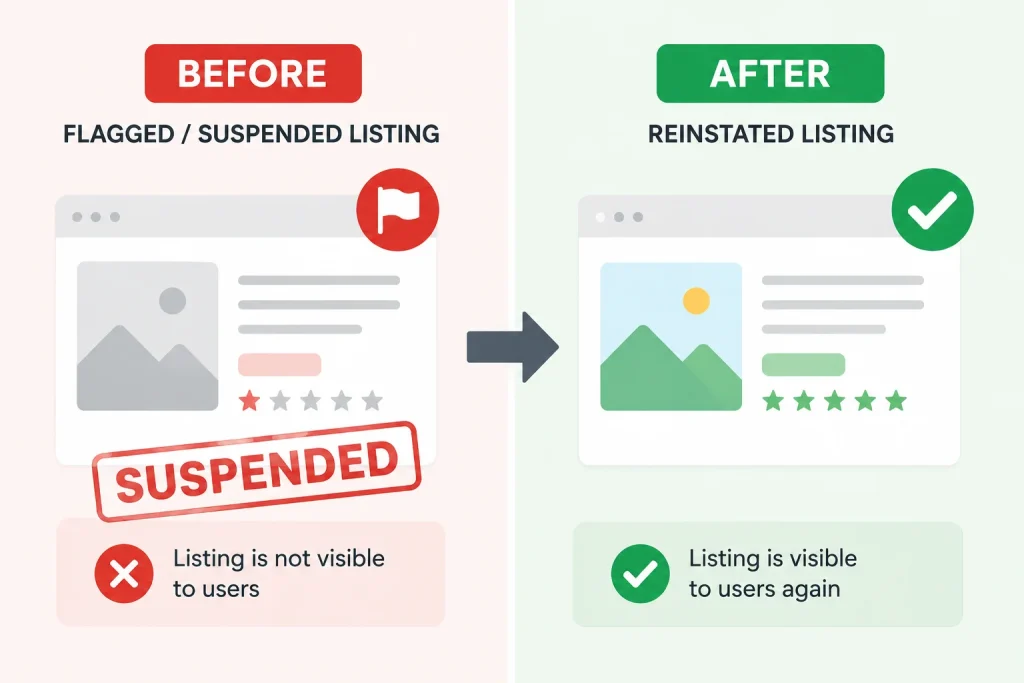
Case Study 1: Resolving a Trademark Complaint That Should Never Have Happened
A client selling phone accessories had written “Compatible with iPhone” in their title and bullet points, genuinely unaware this phrasing alone had triggered a trademark complaint for other sellers before. When the complaint hit, I helped them rewrite every affected listing to describe compatibility without directly using the brand name in a way that implied endorsement, and I submitted a Plan of Action explaining the specific wording change across their catalogue. Amazon reinstated the listings within a few business days, and I use this exact case with new clients now as a reminder that even accurate, honest claims can still trigger a violation depending on the exact phrasing used.
Case Study 2: Catching a Supplier’s Patent Problem Before It Became a Suspension
Another client was about to launch a kitchen gadget sourced from a new supplier. Before listing it, I ran a design comparison against existing patents in that product category as part of our standard sourcing check and found the product closely matched a design that had an active patent filed two years earlier. We went back to the supplier, who had not disclosed this, and switched to a modified design that avoided the protected features entirely. That client never faced a complaint on that product, and avoiding even one suspension on a new launch is worth far more than the extra week it took to catch the issue upfront.
Tools and Services That Help Protect Against IP Infringements
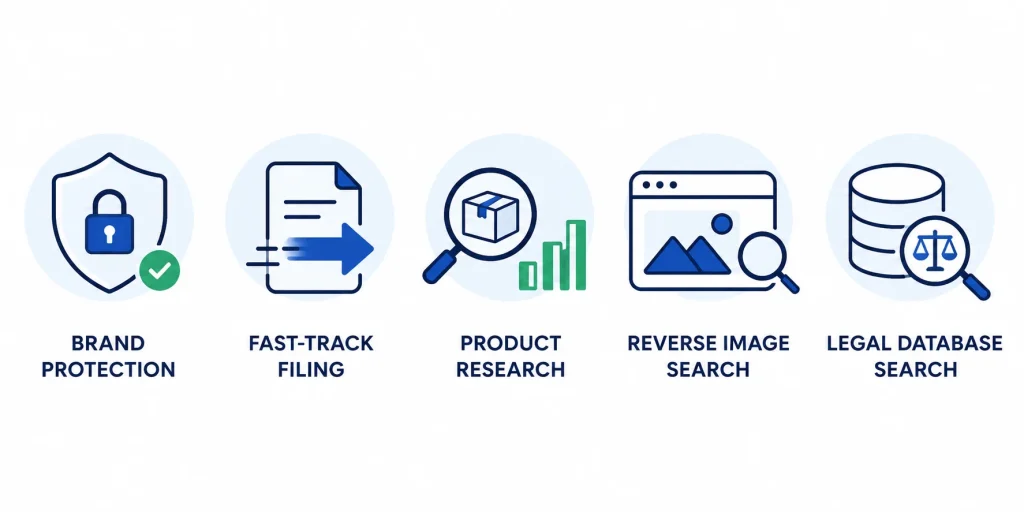
Many tools can help sellers avoid intellectual property infringements. These tools scan for risks and alert you early. You should use them often.
Amazon Brand Protection Tools
| Tool Name | Purpose | How It Helps |
| Amazon Brand Registry | Protects your brand | Stops others from copying your brand |
| IP Accelerators | speed up trademark filing | Helps you get a trademark faster |
| Helium 10 / Jungle Scout | product research tools | Avoid selling patented or trademarked products |
| Google Image Search | Reverse image lookup | Checks if images are used by other brands |
| USPTO / EUIPO databases | Checks trademarks and patents | Confirms if a name, design, or product is protected |
These tools save time. They also prevent future trouble. Using them shows that you take your business seriously. I run a reverse image search on every new product photo before it goes live for clients, and it has caught more than one supplier reusing another brand’s imagery without telling us.
How Amazon Handles Repeated IP Infringements
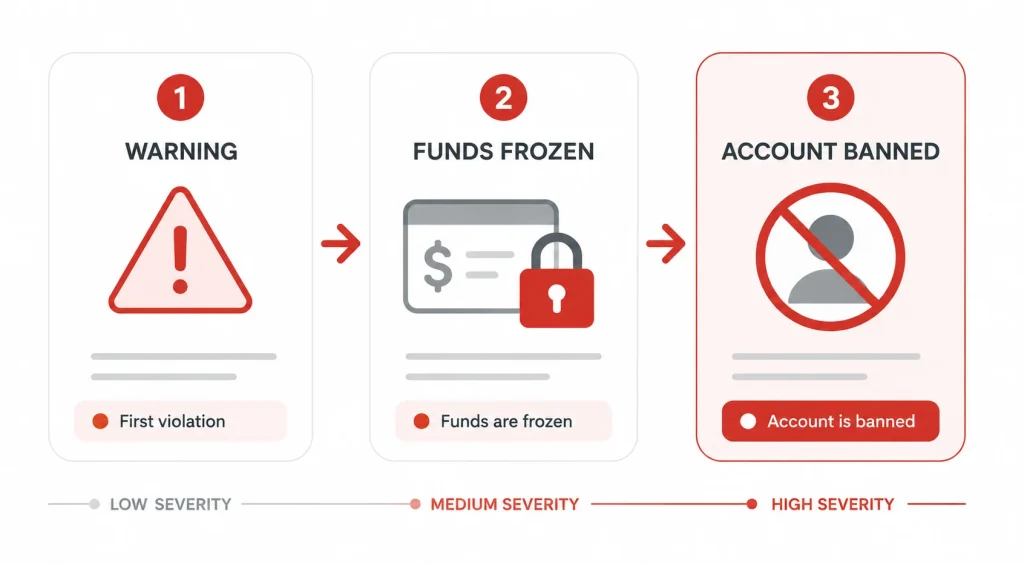
Amazon watches repeat offenders closely. One mistake may get a warning. Repeated intellectual property infringements can get your account permanently banned. Sellers with multiple complaints lose trust. Amazon may freeze their funds. They may also block future listings. This can ruin your store completely.
If your account gets suspended, you must act quickly. Create a strong plan of action. Show that you understand the mistake. Explain how you will fix it. Only a good plan can help you get your account back.
Frequently Asked Questions About Amazon Intellectual Property Infringement
It generally falls into one of three categories: trademark infringement, meaning unauthorised use of a brand name or logo, copyright infringement, meaning copying images, text, or design content, or patent infringement, meaning selling a product that copies a protected invention or design. Amazon and rights holders use “violation” and “infringement” interchangeably across these categories.
Rights holders submit a complaint through Amazon’s official reporting process, and Amazon generally acts on it by removing the listing or suspending the account first, then allowing the seller to respond with a plan of action afterward. Amazon rarely investigates the legal merits deeply before taking initial action, which is why prevention matters more than an appeal after the fact.
Read the notice carefully to confirm exactly what content is being disputed, remove or replace the flagged material immediately, and submit a clear Plan of Action explaining what changed. If you believe the claim is incorrect, gather proof such as your own original files or timestamps showing you created the content yourself.
Yes, a single complaint can result in a listing removal or, in more serious cases, a full account suspension, particularly for trademark or patent claims. Repeated complaints significantly increase the risk of a permanent ban, so treating even a first warning seriously matters.
Search the USPTO or EUIPO databases for similar designs in your product category, ask your supplier directly for written confirmation about patent status, and consider a professional patent search for higher-risk categories like electronics or tools. I treat this as a mandatory step before launching any new product sourced from a supplier we have not vetted before.
Final Thoughts: Stay Informed and Stay Safe
Selling on Amazon is full of chances. However, you must follow the rules. The biggest rule is to respect intellectual property rights and avoid infringement or violation of any kind. If you follow this, your business can grow strong. Use your own images. Write your own listings. Check trademarks and patents. These steps may take time. Still, they will save your account from bigger problems later.
Every smart seller avoids trouble before it starts. You can do this too. Protect your business today. Avoid these common traps and grow with peace of mind. If you need expert help to avoid intellectual property infringements, visit Amazon Consultant. Our team offers support to keep your listings safe and compliant.