Many online sellers face a big decision when choosing a platform to sell their products. The choice often comes down to Amazon vs TikTok Shop. Both platforms offer great opportunities. However, each one works differently and suits different types of sellers.
In this blog, you will learn the key differences between these two platforms based on what I have actually seen work for real sellers, not just the marketing pitch from either platform. You will understand how each one works. You will also see which one fits your business better or whether you genuinely need to choose at all.
Platform Overview: Amazon vs TikTok Shop
Amazon is a large and well-known online marketplace. It allows sellers to list products and reach millions of buyers globally. It offers features like Prime delivery and customer reviews. These features help build trust.
TikTok Shop works inside the TikTok app. It combines short videos and live content with shopping tools. It targets younger users. Sellers promote their products with videos and get direct purchases from their audience.
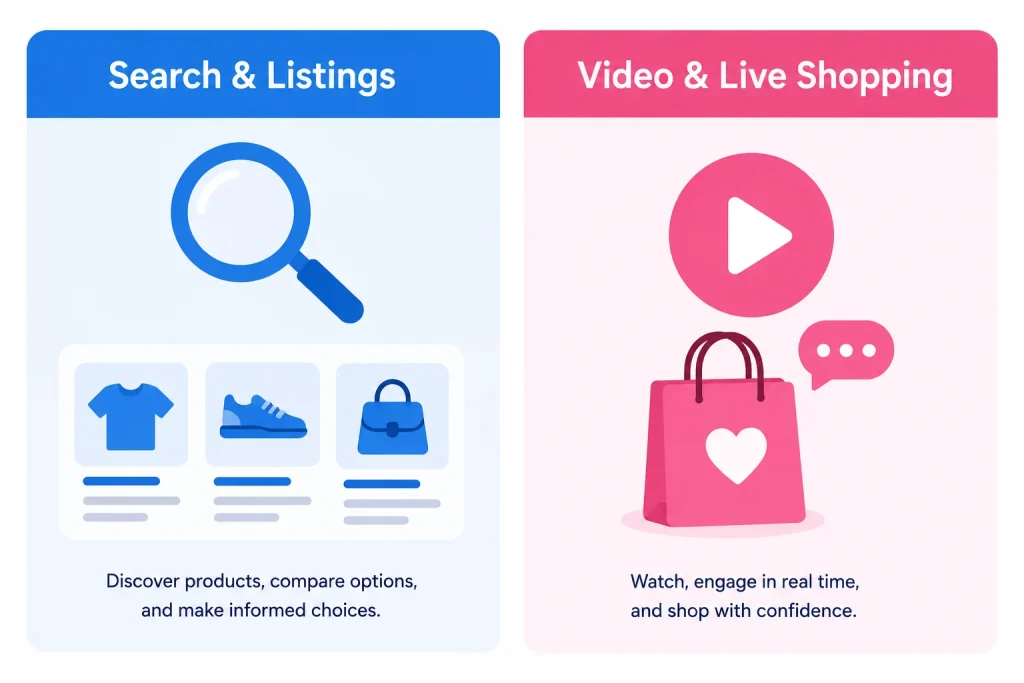
When you compare Amazon vs TikTok Shop, you will notice clear differences. Amazon relies more on search and listings. TikTok Shop uses videos and influencers to push sales quickly. Both platforms offer strong selling tools.
Target Audience
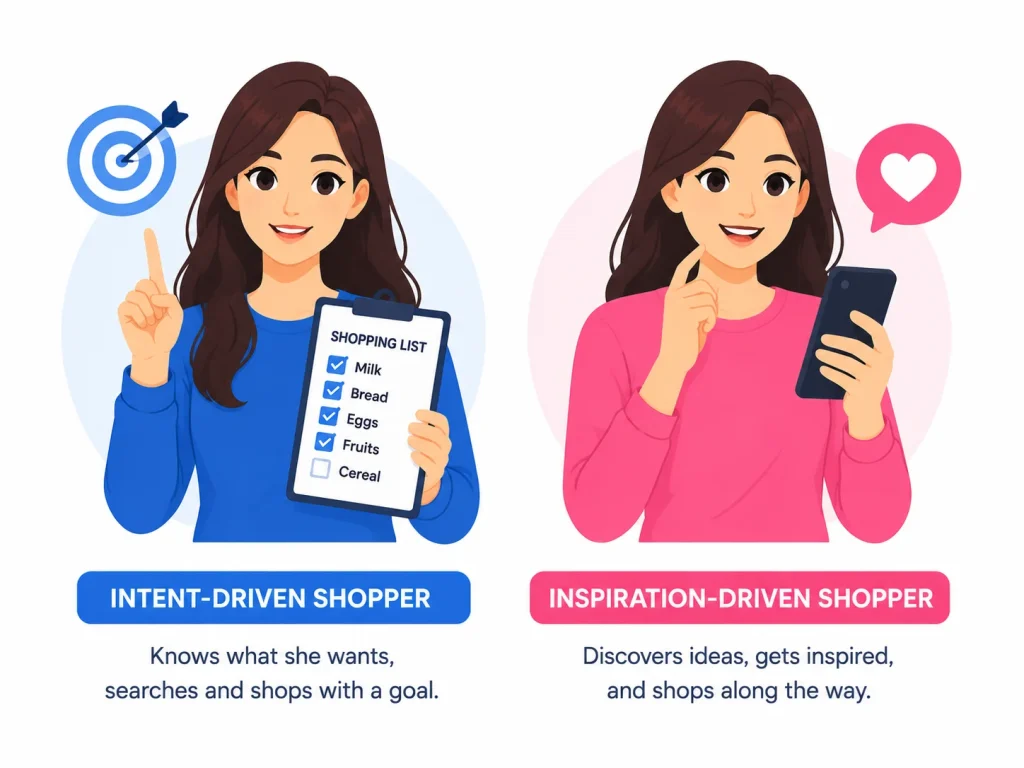
Amazon attracts people of all ages who shop online. Most buyers visit Amazon with the goal to search and buy. This makes them more ready to spend money.
TikTok Shop reaches a younger and more social audience. Most users explore for fun. They shop when they feel inspired by video content. Their buying decisions happen fast and through entertainment.
Sellers should know their target audience. If your products suit active and social users, TikTok Shop might help. If you want a wide and buying-ready audience, Amazon works better.
Seller Requirements and Account Types
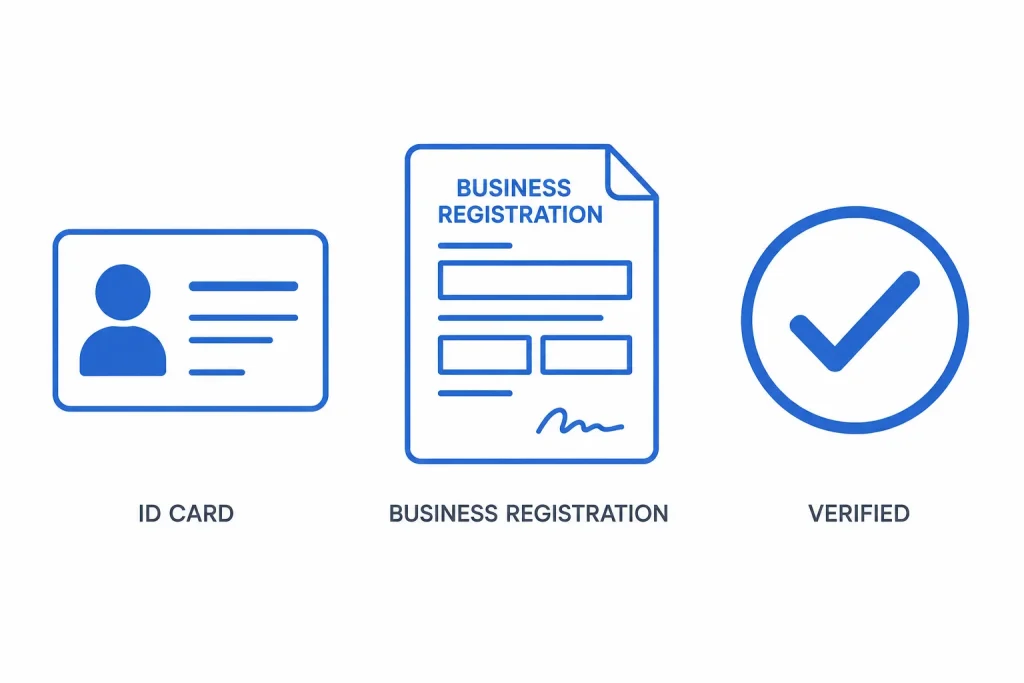
To sell on Amazon, you need to register for a seller account. You need to provide tax and identity information. Amazon asks for full product details. It reviews your listings to keep quality high.
TikTok Shop also needs a proper seller account, and this is a common point of confusion I hear from new sellers. A regular personal TikTok profile cannot sell products directly. You must register specifically for TikTok Shop as a business, providing business registration documents and identity verification, even if you are a sole trader rather than a registered company. Some regions allow individual or sole proprietor registration without a formal limited company, but you still need to go through TikTok Shop’s dedicated seller onboarding rather than using your existing personal account as is.
Amazon asks for more product data and offers strong seller tools. TikTok Shop asks sellers to be creative and active in video posting. Comparing Amazon vs TikTok Shop, you will see Amazon focuses on control, while TikTok pushes fast content.
Can You List the Same Products From Amazon Onto TikTok Shop?
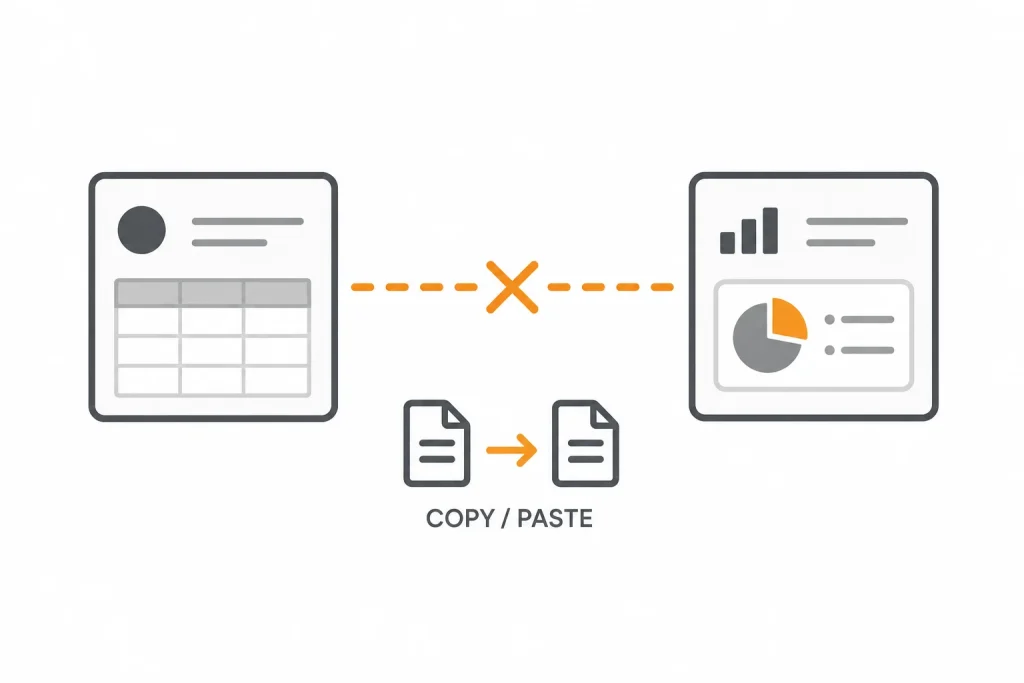
This is one of the most common questions I get from sellers already established on Amazon who want to expand into TikTok Shop, so it deserves a direct answer.
There is no automatic, official sync between an Amazon listing and TikTok Shop. You cannot simply import your Amazon catalog into TikTok Shop with one click, since the two platforms are not connected in that way. What you can do is manually recreate your listings inside TikTok Shop’s seller dashboard, reusing your own product photos, descriptions, and specifications, since you own that content as long as you created it originally.
If you are managing inventory across both platforms, this is exactly where a multi-channel inventory tool earns its cost. Several of the platforms I cover in our guide to Amazon inventory management tools, including Sellbrite and Linnworks specifically, support syncing stock levels across Amazon and TikTok Shop at once, which prevents overselling when the same physical stock is listed in two places. I would not recommend running both platforms manually off the same inventory pool without one of these tools once you have any meaningful order volume, since the risk of overselling grows fast.
One thing worth flagging honestly: if any of your product images or descriptions were licensed from a supplier or brand rather than created by you, check that your usage rights actually extend to a second platform before reposting the same content there.
Product Discovery Methods
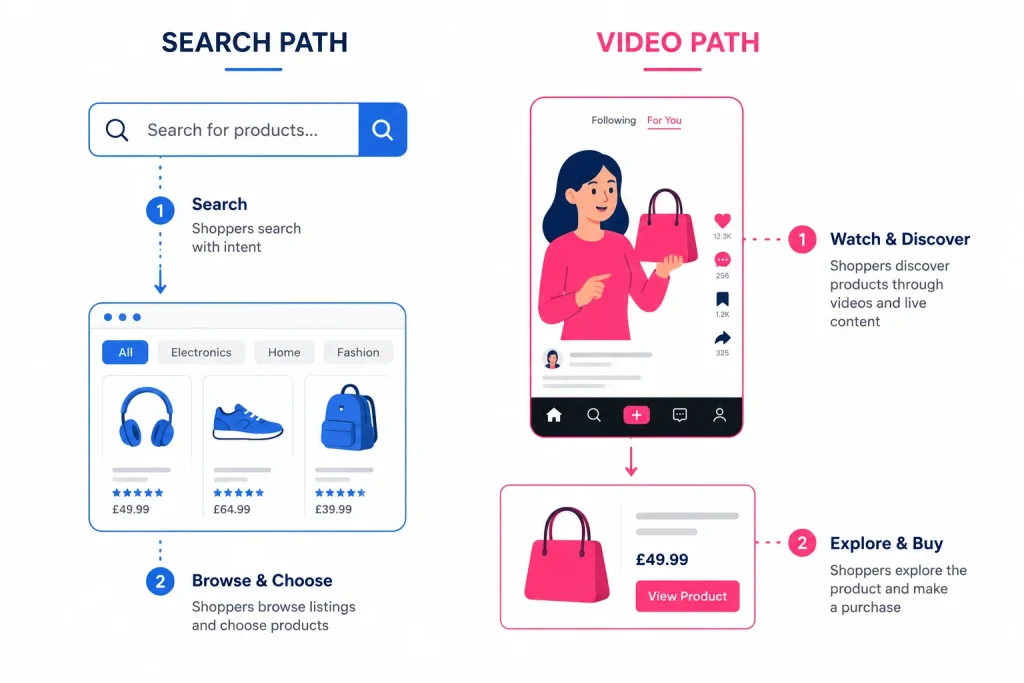
Amazon shoppers search using keywords. The platform suggests products based on price, reviews, and delivery speed. Search results guide shoppers to buy.
TikTok Shop works through the “For You” feed. Viewers see product videos based on interests and actions. Sellers boost products by creating fun, helpful videos.
When thinking about Amazon vs TikTok Shop, remember Amazon drives sales from search. TikTok drives sales from content. Both use data to help sellers.
Selling Fees and Costs
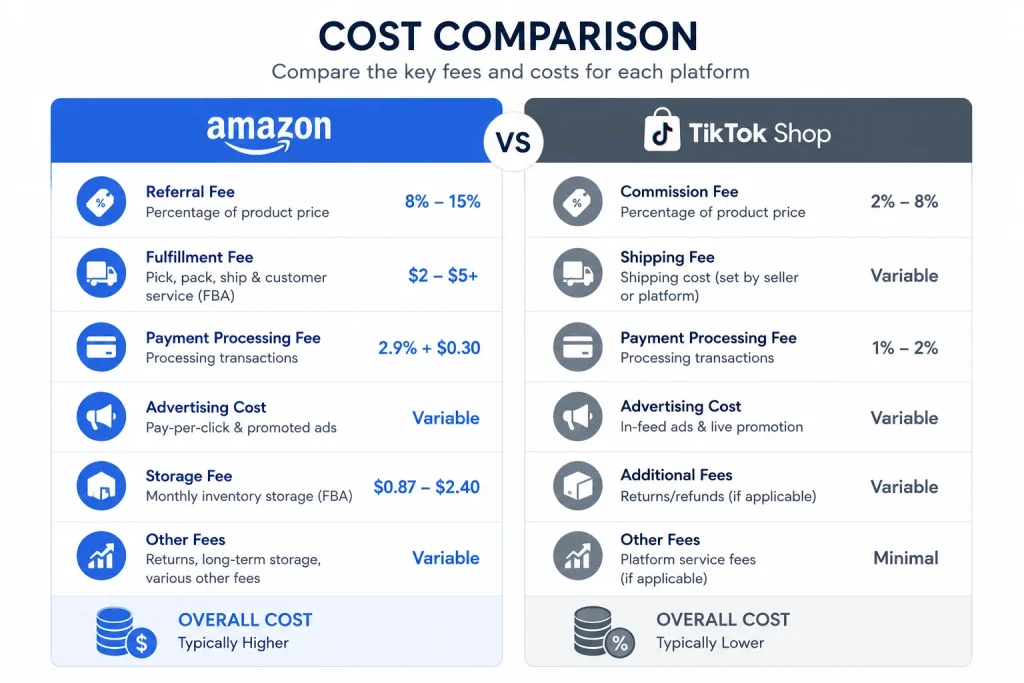
Amazon charges referral fees on every sale. You may also pay for storage and shipping if you use FBA. These fees depend on product type.
TikTok Shop also charges fees. It collects a commission per sale. TikTok may also charge extra fees for promotions and ads.
Here is a breakdown of costs:
Amazon:
- Monthly seller fee (professional account)
- Referral fees (8% to 15%)
- Fulfilment fees for FBA (if used)
TikTok Shop:
- Commission per sale
- Promotional tool fees
- Video-content creation cost (if you hire influencers)
Sellers should check their profit margins carefully. Some products work better on low fee platforms. Comparing Amazon vs TikTok Shop can help you choose the cheaper and better option for your goals.
TikTok Ads vs Amazon Advertising: Which Is Better for Sales?
This question comes up constantly, especially from smaller businesses trying to decide where to put a limited ad budget, so I want to compare the two directly rather than just listing what each one offers.
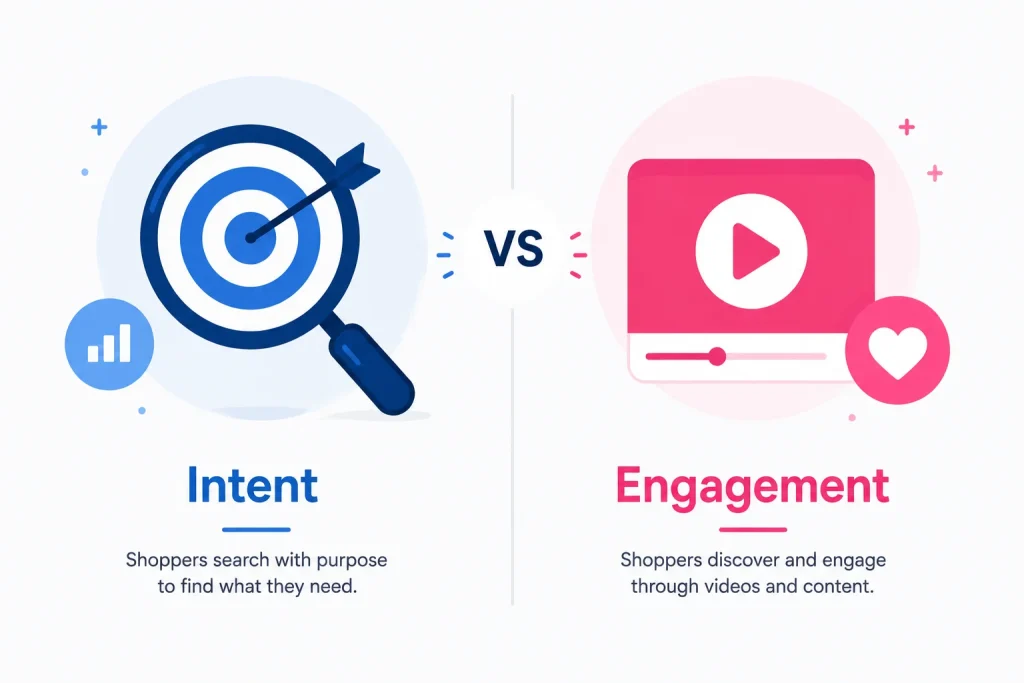
Amazon provides tools like Sponsored Products, Sponsored Brands, and Amazon DSP. These tools allow sellers to target buyers during shopping. Ads can appear in search results or on product pages. The key advantage here is intent. Someone searching for your exact product category on Amazon is already close to a buying decision, which tends to make Amazon ads more directly efficient for products people actively search for by name or category.
TikTok Shop uses video based ads. You can run In-Feed Ads, TopView Ads, or partner with creators. TikTok ads focus on engagement rather than search intent, since viewers are not actively looking for your product when they see the ad. This makes TikTok ads better suited to visually demonstrable products, impulse purchases, and building brand awareness rather than capturing existing demand.
For a small business specifically, I generally recommend starting with Amazon Sponsored Products if your product already gets organic search volume in its category, since the cost per result tends to be more predictable. TikTok ads can outperform Amazon for visually striking or trend-driven products, but they usually require an existing content strategy and some tolerance for inconsistent results while you learn what resonates, which is a harder starting point for a business with a small, fixed ad budget.
In the debate of Amazon vs TikTok Shop advertising, you must understand your product. If it needs demonstration or lifestyle visuals, TikTok works well. If your product sells well in search, then Amazon fits better.
Fulfilment and Delivery Options
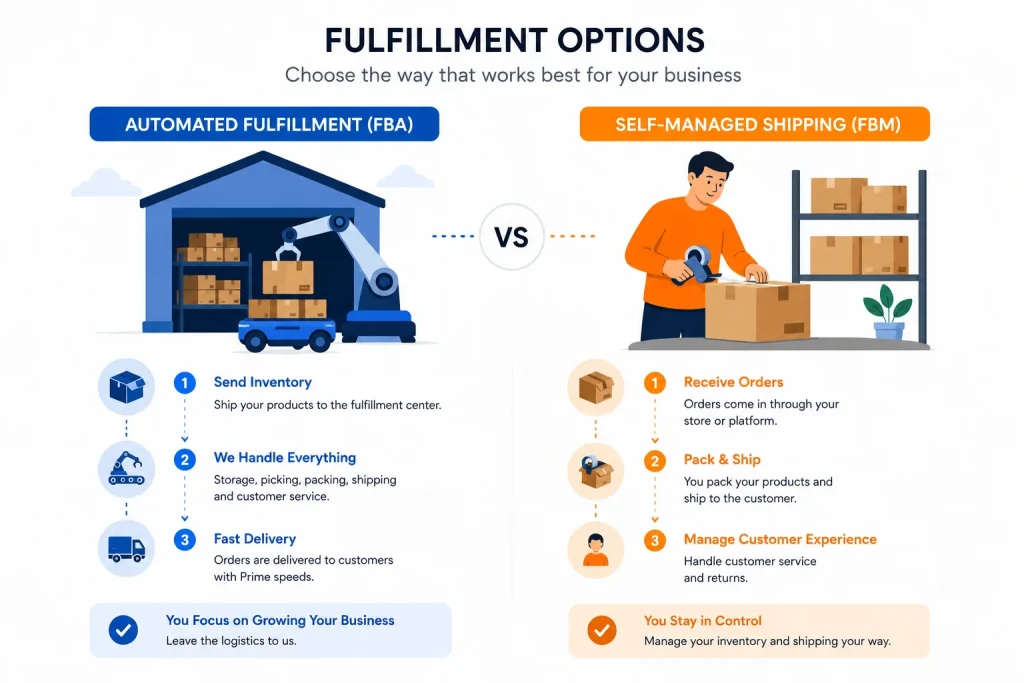
Amazon sellers can choose Fulfilment by Amazon (FBA). With FBA, Amazon stores and ships your products. It also handles returns. This makes delivery fast and easy.
TikTok Shop sellers generally handle shipping themselves, shipping from their own location or warehouse. In select regions, TikTok has introduced its own fulfilment program similar in concept to FBA, where TikTok Shop stores and ships inventory on the seller’s behalf, though this is not universally available everywhere TikTok Shop operates. Where TikTok’s own fulfillment is not available, sellers ship directly from wherever their stock is held, which means delivery speed and consistency depend entirely on the seller’s own logistics setup.
You must think about fulfilment when choosing Amazon vs TikTok Shop. If you want hands-off delivery, Amazon is the more mature option today. If you can manage shipping yourself, or your region supports TikTok’s own fulfilment service, TikTok Shop gives you more flexibility.
Can You Sell on Both Platforms at the Same Time?
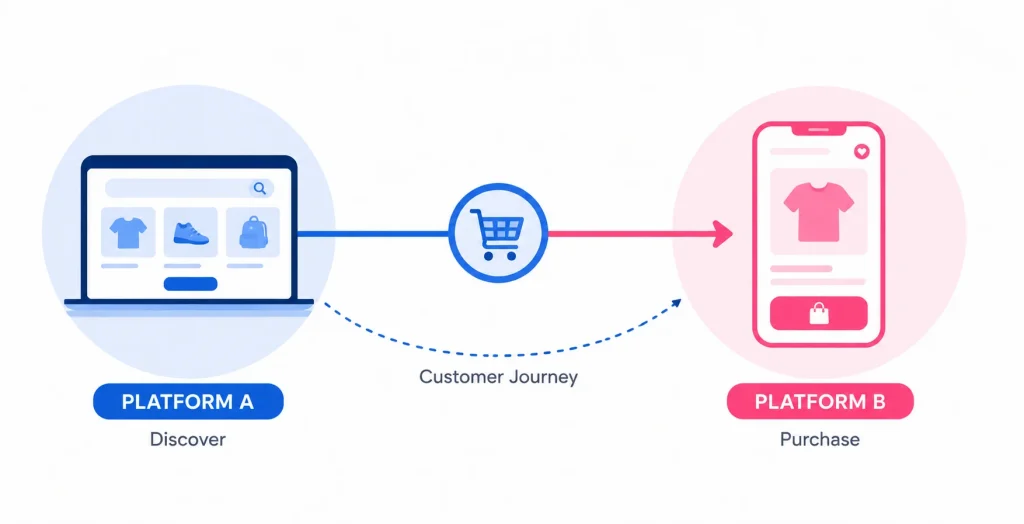
Most comparisons frame this as an either/or decision, and I think that framing undersells what is actually the smarter move for a lot of sellers. In my experience, the sellers who get the most out of TikTok Shop are usually the ones who already have an established Amazon presence and use TikTok specifically to build brand awareness and drive impulse purchases, sometimes routing that same audience back toward their Amazon listings rather than fulfilling every order through TikTok Shop itself.
Evaluating this as a cross-channel opportunity rather than a single platform choice usually comes down to three questions: does your product photograph or demonstrate well on video, can your operations handle two separate order and inventory streams without a proper syncing tool, and is your margin healthy enough to absorb fees on both platforms if a customer discovers you on one and buys on the other. If the answer to all three is genuinely yes, running both is often more profitable than picking one, provided your inventory tooling can keep up.
Customer Support and Dispute Handling
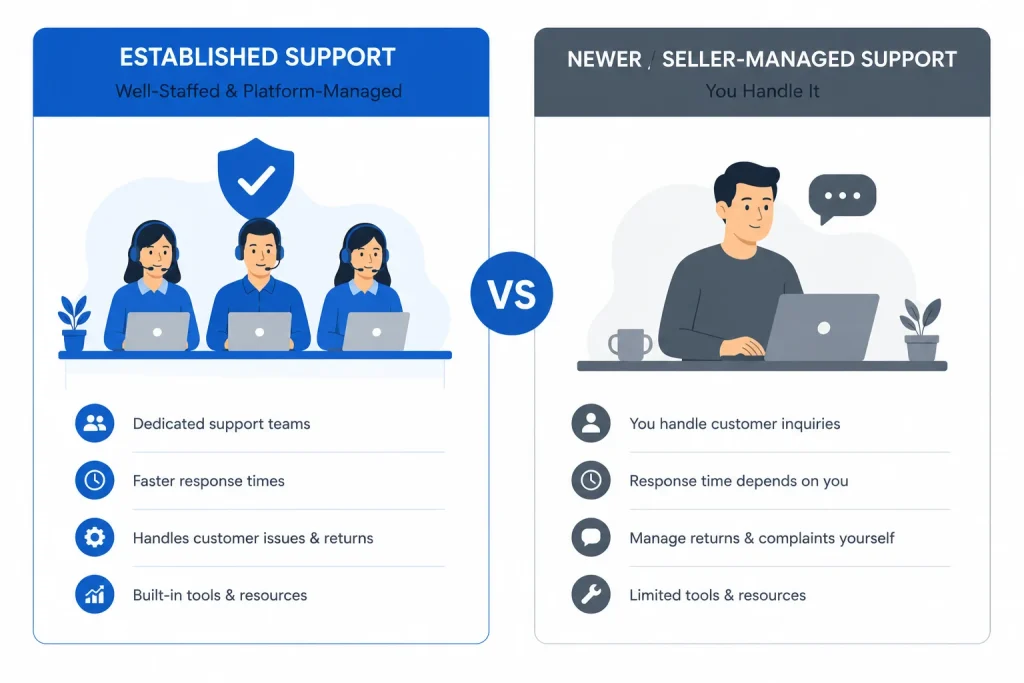
Amazon offers full support for buyers and sellers. It handles returns, refunds, and disputes. Buyers trust Amazon for this reason. Sellers benefit from fewer direct complaints.
TikTok Shop has growing support services. It offers buyer protection. However, sellers must handle most customer questions. The system is still newer and less established than Amazon’s.
When thinking about Amazon vs TikTok Shop, support matters. Amazon gives strong systems and policies built up over two decades. TikTok offers support, but sellers must stay more active in solving issues directly.
Product Types That Perform Best
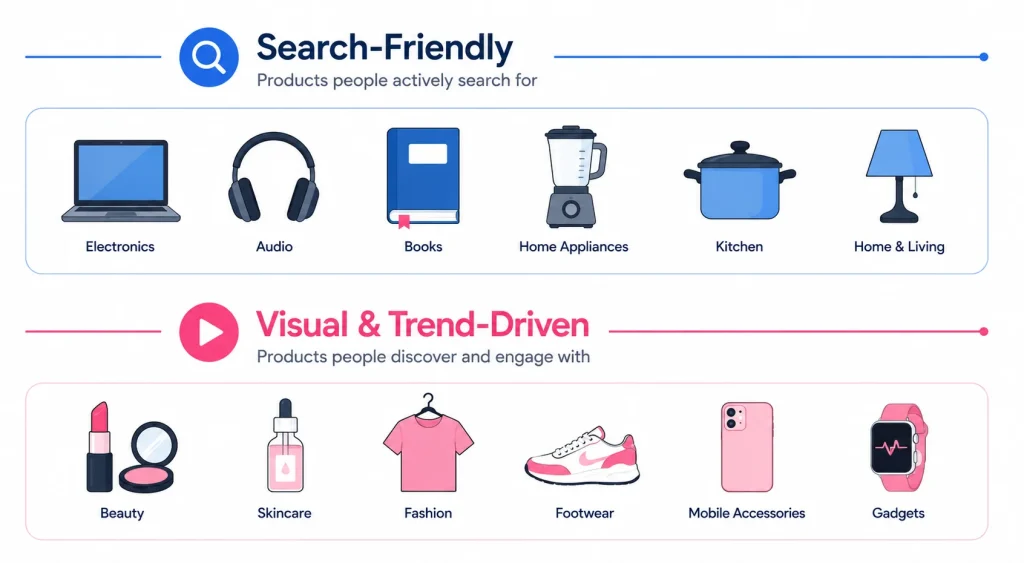
Some products work better on Amazon. Others sell more on TikTok Shop. Here are examples to guide you:
Best on Amazon:
- Electronics
- Books
- Office supplies
- Health and personal care
- Home essentials
Best on TikTok Shop:
- Beauty products
- Skincare and makeup
- Clothing and fashion
- Trending gadgets
- Novelty or gift items
Amazon suits items that need trust and reviews. TikTok works well for fun, stylish, and visual items. This is a key part of the Amazon vs TikTok Shop debate.
Case Studies: Amazon and TikTok Shop in Practice
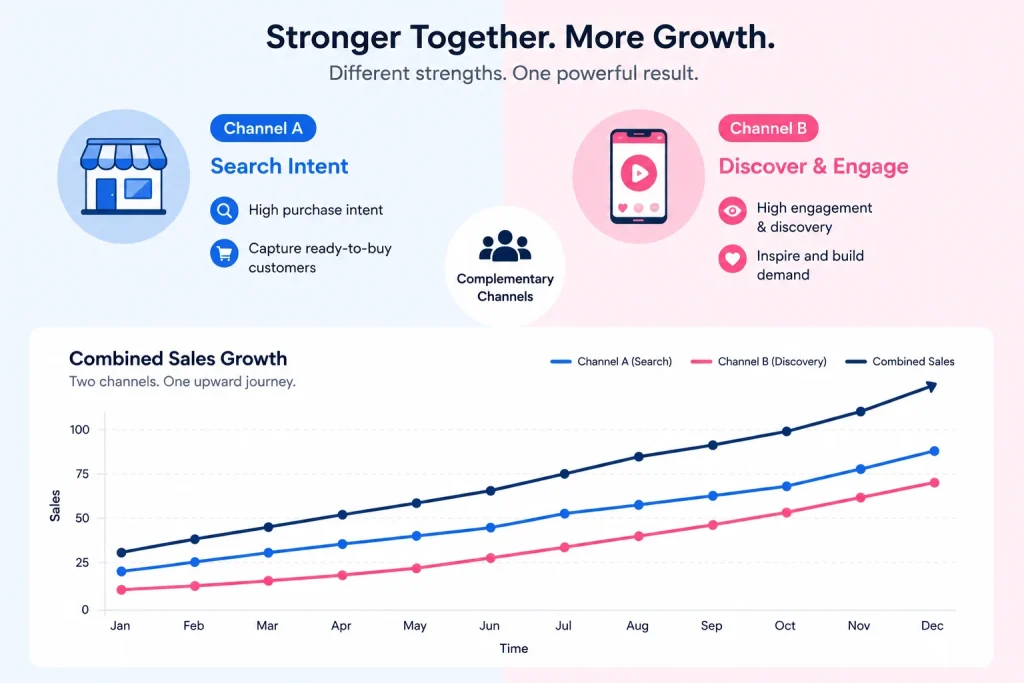
Case Study 1: Using TikTok Shop to Feed an Amazon Listing Rather Than Replace It
A client selling a visually distinctive skincare tool had a healthy but plateaued Amazon listing. Rather than treating TikTok Shop as a competing sales channel, I helped them build a simple content strategy showing the product in use, with the TikTok Shop listing acting as the immediate purchase point for impulse buyers while their Amazon listing continued capturing search-driven demand from people who researched the product afterward. Their combined revenue across both channels grew meaningfully within the following quarter, and notably their Amazon sales also increased, suggesting the TikTok exposure was building awareness that carried over rather than cannibalising it.
Case Study 2: Avoiding an Overselling Problem When Expanding to a Second Channel
Another client expanded from Amazon only into TikTok Shop without connecting their inventory between the two platforms, manually updating stock counts on each side. Within the first month, they oversold a limited of batch product because a spike in TikTok orders was not reflected on their Amazon listing in time. I moved them onto a shared inventory tool with real-time syncing across both channels, and the overselling problem stopped completely from that point on. It is a mistake I now flag with every client before they add a second sales channel, since it is entirely avoidable with the right tool in place from day one.
Which Platform Should You Choose?
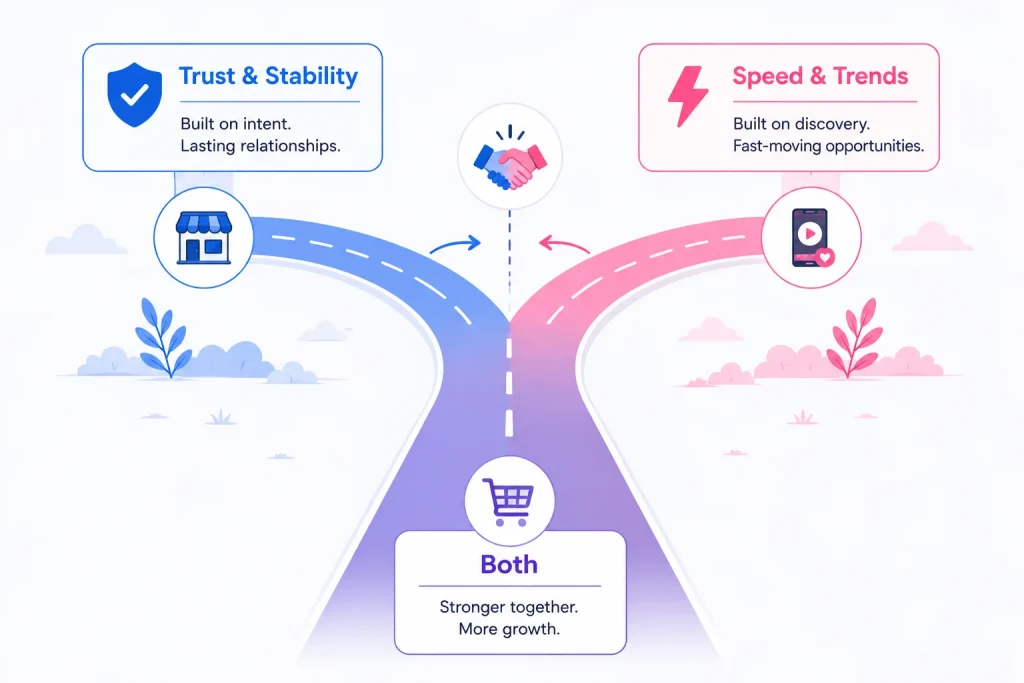
Choosing between Amazon and TikTok Shop depends on your goals. You must know your product, audience, and business model.
Amazon is great for long-term growth. It offers trust, strong support, and stable systems. It works best if you sell useful, reviewed items.
TikTok Shop gives you fast growth and trending sales. It fits if you enjoy content creation. You must stay active and respond to trends fast. Sellers who love visuals find success here.
Frequently Asked Questions About Amazon vs TikTok Shop
No, a standard personal TikTok profile cannot sell products. You need to register through TikTok Shop’s dedicated seller onboarding, which requires business or sole trader verification depending on your region, even if you do not have a formally registered limited company.
There is no automatic sync between the two platforms. You can manually recreate your own listings on TikTok Shop using content you already own, but you will need to set each listing up separately, and a multi-channel inventory tool becomes important once you are managing stock across both platforms at once.
In most cases, orders ship from the seller’s own location or warehouse. In select regions, TikTok offers its own fulfilment service similar to Amazon FBA, where TikTok stores and ships inventory on the seller’s behalf, though this is not available in every market TikTok Shop operates in.
It depends on your product. Amazon ads tend to work better for products people already search for by name or category, since shoppers arrive with existing buying intent. TikTok ads work better for visually demonstrable or trend-driven products where the goal is building awareness and capturing impulse purchases rather than existing search demand.
For many sellers, running both is more profitable than choosing one, provided your product suits video content and your operations can handle two order streams without overselling. I generally recommend establishing on Amazon first, then adding TikTok Shop once you have inventory tooling in place to sync stock across both channels.
Conclusion
Both Amazon and TikTok Shop offer good selling chances. Each platform suits different styles. Each one needs unique strategies. You must test and learn to see what works best.
Sellers who enjoy video creation and social trends should use TikTok Shop. Sellers who want structure, global reach, and buyer trust should go with Amazon. If your product and operations can support it, running both at once is often the strongest option of all. Try it for yourself and see which results you get.
For expert help with your Amazon store, visit Amazon Consultant today.