Amazon Black Friday is one of the most important opportunities for ecommerce businesses to attract shoppers, increase product visibility and generate seasonal revenue. The event encourages customers to purchase gifts, electronics, household essentials, beauty products and other items at competitive prices.
In 2026, Amazon Black Friday Week runs from 19 to 30 November. Black Friday falls on Friday, 27 November, while Cyber Monday takes place on 30 November. Amazon UK has announced more than one million deals across popular categories, with selected discounts reaching 45%.
The growing popularity of Black Friday sales creates opportunities for sellers, but increased competition can make profitability difficult. Businesses need more than attractive discounts to achieve sustainable results. They must prepare inventory, improve product listings, manage advertising costs and understand customer purchasing behaviour. This guide explores ten practical strategies that Amazon sellers can use to improve their performance during Amazon Black Friday 2026 and prepare for future seasonal shopping events.
Why Amazon Black Friday Matters for Sellers

Black Friday has become a major online shopping occasion. Adobe Analytics reported that US consumers spent $11.8 billion online on Black Friday 2025, representing a 9.1% year-on-year increase. Cyber Monday generated $14.25 billion in online spending, increasing by 7.1%.
These figures cover the wider US retail market rather than Amazon alone. However, they demonstrate the scale of customer demand during the holiday shopping period.
Amazon also reported that Prime Day 2025 was its biggest Prime Day event ever, with customers saving billions across more than 35 product categories. Independent sellers achieved record sales and products sold during the event. For Amazon sellers, these shopping occasions provide valuable opportunities to reach customers who are actively comparing products and looking for seasonal savings.
10 Strategies to Increase Amazon Black Friday Sales

1. Prepare Inventory Before Customer Demand Increases
Inventory planning is one of the most important steps in preparing for Amazon Black Friday. A product may attract strong demand, but insufficient stock can prevent a seller from converting that interest into revenue.
Sellers should review previous sales, current inventory levels, supplier lead times and expected promotional demand. Products with consistent sales throughout the year may require larger stock quantities than seasonal items with uncertain demand.
A practical inventory forecast should include:
- Previous seasonal sales performance.
- Current stock and reserved inventory.
- Supplier production and delivery timelines.
- Expected advertising-driven demand.
- A reasonable safety-stock allowance.
2. Optimise Product Listings for Seasonal Searches
Customers frequently search for products using specific terms during Black Friday. Sellers should ensure their listings communicate product benefits clearly and match relevant customer search behaviour. Product titles should explain the product type, brand, essential features and important specifications. Bullet points should focus on practical benefits rather than repeating keywords unnecessarily.
Images should show the product clearly, while additional images can explain dimensions, materials, compatibility and usage. A well-designed listing helps customers understand the product before making a purchase.
3. Use Promotions That Support Profitability
Discounts can attract customers, but excessive price reductions may reduce profit without creating sustainable growth. Before launching an Amazon Black Friday sale, sellers should calculate their contribution margin. This includes product cost, Amazon referral fees, fulfilment expenses, advertising costs and promotional fees.
A seller should establish the minimum acceptable selling price before applying a discount.
Amazon offers several promotional options, including Best Deals, Lightning Deals and Prime-exclusive price discounts. Availability and eligibility depend on the product, marketplace and current Seller Central requirements.
4. Improve Amazon PPC Campaign Performance
Advertising competition usually increases during major shopping events. Sellers should prepare their Amazon PPC campaigns before customer demand reaches its peak.
Sponsored products campaigns can help increase product visibility in relevant search results and product detail pages. Sponsored Brands and Sponsored Display may also support brand discovery and product consideration, depending on eligibility.
A structured campaign strategy should include:
- High-performing exact-match keywords.
- Relevant phrase and broad-match discovery campaigns.
- Negative keywords for irrelevant searches.
- Separate campaigns for priority products.
- Daily budget monitoring.
5. Build a Competitive Pricing Strategy
Customers compare prices across multiple listings before purchasing. Sellers should therefore review competitor pricing, product value and historical price movements before adjusting their offers. A competitive price does not always mean the lowest price. Product quality, reviews, delivery speed, brand trust and listing content can influence purchasing decisions.
Sellers should monitor their Buy Box performance and ensure their offers remain competitive without damaging their margins.
During Amazon Black Friday weekend, pricing should be reviewed regularly because competitor promotions and customer demand can change quickly. A planned pricing strategy helps sellers avoid reactive discounting and maintain stronger financial control throughout the event.
6. Improve Product Reviews and Customer Trust
Customer reviews can influence product selection, particularly when shoppers compare several similar products. Sellers should monitor customer feedback and identify recurring concerns. Issues related to product quality, packaging, sizing or instructions should be addressed before the shopping event.
Amazon’s approved review programmes and request-review tools can help eligible sellers encourage authentic customer feedback. Sellers must not purchase reviews, offer incentives for positive ratings or manipulate customer feedback.
7. Use Deals and Coupons Strategically
Coupons can make a product stand out in search results and help communicate a saving to customers. However, sellers should evaluate the total cost of each promotion. Coupon fees, discount value and advertising expenses can reduce the final contribution margin.
The most effective approach is to prioritise products with strong conversion rates, sufficient inventory and healthy margins. Sellers should also check current promotion eligibility and reference-price requirements in Seller Central. Amazon may update deal criteria, fees and submission deadlines for different marketplaces.
8. Create a Mobile-Friendly Shopping Experience
Mobile devices play an important role in online shopping. Adobe reported that smartphones accounted for 56.4% of US online holiday-season transactions in 2025. This figure covers the broader ecommerce market, but it highlights the importance of mobile-friendly product pages.
Product images should remain clear on smaller screens. Titles should communicate essential information quickly, while bullet points should be easy to scan. A strong mobile listing helps customers understand the product without excessive scrolling or confusion. Sellers should also check whether their product variations, images and pricing display correctly across mobile and desktop experiences.
9. Monitor Sales Data and Adjust Campaigns
Black Friday performance should be monitored throughout the event rather than reviewed only after it ends. Sellers should track daily revenue, units sold, advertising expenditure, conversion rate, inventory levels and contribution margin.
If a campaign generates clicks but few orders, the seller should investigate keyword relevance, product pricing, reviews and listing quality. If a product converts well but its advertising budget runs out early, the seller may consider adjusting its budget based on profitability and stock availability.
Data-driven decisions help sellers respond to changing demand without making unnecessary price or advertising changes.
10. Prepare for Cyber Monday and Future Sales Events
Black Friday does not represent the end of seasonal demand. Cyber Monday and the wider Christmas shopping period can create additional opportunities for sellers.
Amazon’s 2026 Black Friday Week continues through Cyber Monday on 30 November. Sellers should review campaign performance and inventory before the final days of the event.
Successful products may continue attracting customers after the main promotional period. Businesses should therefore maintain suitable stock and avoid ending profitable campaigns prematurely. The same preparation can support future events, including Amazon Spring Sale 2026, Amazon Prime Day 2026 UK and other seasonal promotions.
Amazon Black Friday and Prime Day: Planning Future Sales
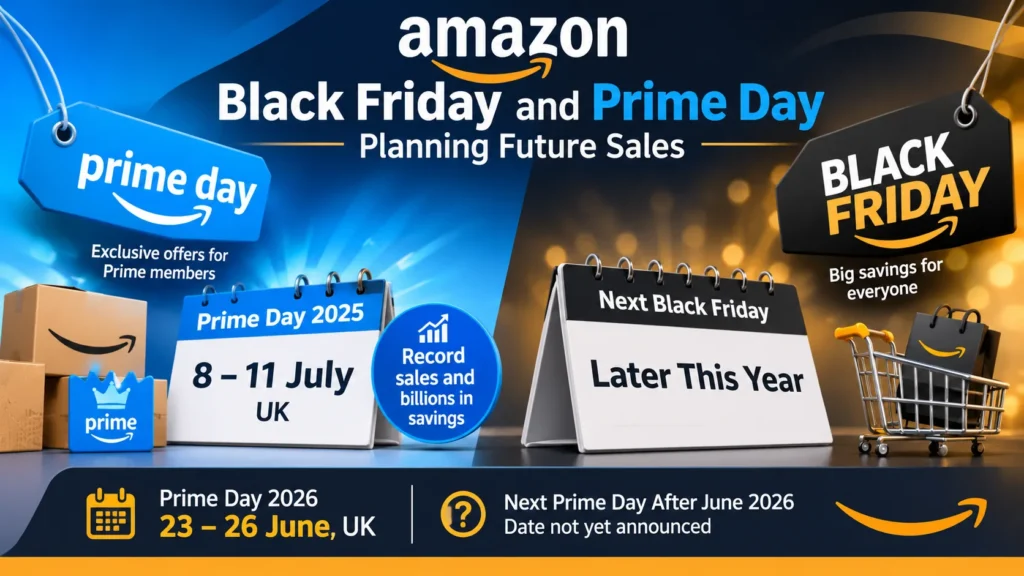
Amazon Prime Day and Black Friday attract customers at different points in the retail calendar. Prime Day generally focuses on exclusive offers for Prime members, while the main Black Friday sale is available to a wider customer base.
Amazon Prime Day 2025 ran from 8 to 11 July in the UK. Amazon reported record sales and billions in customer savings. In 2026, Amazon UK confirmed Prime Day from 23 to 26 June. The next Prime Day date after June 2026 has not been officially announced as of 25 November 2026.
How Amazon Consultant Helps Sellers Increase Sales
Amazon Consultant helps businesses improve their marketplace performance through strategic account management and sales-focused optimisation. Its services include Amazon PPC management, listing optimisation, Amazon SEO and full-service Amazon management.
The team can help sellers identify product opportunities, improve listing quality, develop advertising strategies and monitor campaign performance. These activities support better visibility, stronger conversion opportunities and more effective sales management.
For businesses preparing for Amazon Black Friday, professional support can help coordinate advertising, pricing, inventory and promotional planning. A structured strategy enables sellers to focus on profitable growth rather than relying only on temporary discounts.
Conclusion
Amazon Black Friday 2026 provides sellers with an important opportunity to increase product visibility, attract seasonal shoppers and generate additional revenue.
However, successful performance depends on preparation, not discounting alone. Inventory planning, listing optimisation, advertising management, competitive pricing and profitability analysis all contribute to stronger results. Amazon Consultant helps sellers develop and manage strategies that support sales growth throughout major shopping events. With a structured approach, businesses can make better decisions during Black Friday and build a stronger foundation for future Amazon sales opportunities.
Frequently Asked Questions
Amazon Black Friday Week runs from 19 to 30 November 2026. Black Friday is Friday, 27 November, and Cyber Monday is Monday, 30 November.
Amazon’s UK Black Friday Week began on 19 November 2026. Selected Amazon devices had earlier discounts from 16 November.
Amazon’s UK Black Friday Week lasts 12 calendar days, from 19 November through 30 November 2026.
Prime members receive access to selected exclusive promotions and deal drops. However, customers do not generally need Prime membership to shop the main Black Friday sale.
Amazon has not announced the next Prime Day date after its June 2026 event. Sellers should monitor official Amazon announcements for confirmed dates.